

 Our Superpowers
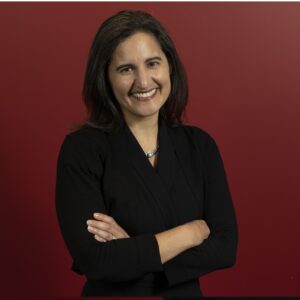
By Dara Rudick, CAE — CEO | Interim Executive Director
“I can’t sleep, I can’t eat, and I am scared to move away from home.”
My young friend Camila told me this over dinner just days before she was scheduled to move into her college dorm. She had graduated high school with honors and been accepted to a prestigious university where she planned to study nursing. This should have been a moment of pure excitement.
“I’m afraid that when I come home, my dad will have been taken from this country,” she said.
This is happening across our country right now—families torn apart, communities living in fear.
American Exceptionalism
The phrase “American Exceptionalism” is often used to suggest Americans are inherently superior. That’s not what I see.
What I see are exceptional people—not exceptional because they’re American, but exceptional because they’re, well, exceptional.
Exceptional is Camila (not her real name). Her parents fled to the U.S. to escape life-threatening violence. They worked, paid taxes, and raised their family. A few years later, terrified of deportation to a country where their lives were in danger, their family of six moved into a faith institution’s small basement, where they lived for four years. Their seventh child was born there. As a pre-teen Camila managed the weekly grocery shopping, food preparation, and helped raise her younger siblings.
Now, Camila is an 18-year-old, preparing to become a nurse.
Exceptional are the 200+ people from different faith communities who supported Camila’s family while they lived in that basement, providing security, food, clean laundry, transportation, and schooling.
These folks stood alongside Camila’s family around the clock, celebrated birthdays, and visited after medical surgeries.
Exceptional is my friend Leila (not her real name), a talented esthetician and small business owner who, with her husband and two young children, fled her homeland. Her family had previously helped the U.S. military, as a result, their lives became under threat.
Once here, they quickly learned English and secured jobs—she in beauty services, her husband with a local nonprofit—and became beloved in their community. Leila built a business, renting space in two Spanish-speaking retail centers, and learning Spanish, her third language.
Last week, she told me she’s creating plans in case she and her husband are suddenly taken from the U.S., leaving her 7- and 9-year-old children alone.
The Organizational Impact
This isn’t abstract policy—it affects the organizations I work with daily.
At MHQ, we manage associations with members from dozens of countries. ARIA’s World Risk and Insurance Economics Congress brings together scholars from across the globe. NARST’s international conferences host 1,200 attendees from 49 countries. PCAF’s collaborative climate finance work depends on cross-border partnerships.
When we create barriers to exceptional people, we don’t just harm families. We weaken the research, innovation, and collaboration that drives progress.
Organizations thrive when they welcome exceptional people, when they create systems of support, opportunity, and belonging. They actively seek diverse perspectives and global talent.
They fail when they operate from fear, when they prioritize division over excellence, when they tear apart rather than build up.
The choice facing our country is the same choice every organization faces: Do we want to be exceptional?
If we do, then we must welcome exceptional people, regardless of where they were born.
True Exceptionalism
True exceptionalism isn’t about superiority; it’s about creating places where Camila can become a nurse without fearing she’ll lose her parent, where Leila can build a business in peace, and where communities support families rather than protect them from their own government.
How will you choose exceptionalism over fear?
About MHQ
Driven by the vision of a thriving, vibrant community, MHQ is a woman-owned, world-class management company that delivers customized services. Founded in 2013, MHQ has provided association management services since its inception, as well as infrastructure to organizations in a range of industries. We serve professional and trade associations, as well as government and public sector entities. For more about MHQ, visit https://www.management-hq.com/.